All abrasive blast pots conform to the regulations under Section 44 of the Occupational Health and Safety Act 1993 (Act No. 85 of 1993) as categorized in terms of SANS 347 requirements.
Blast pot log book includes:
- Hydro-static pressure test certificate
- Certified safety blow-off valve
- Certified pressure gauge
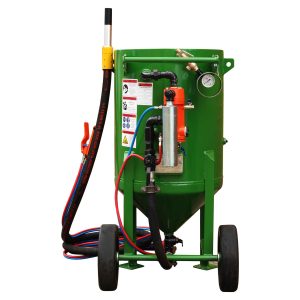
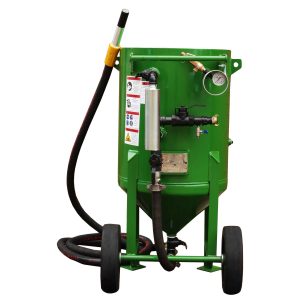
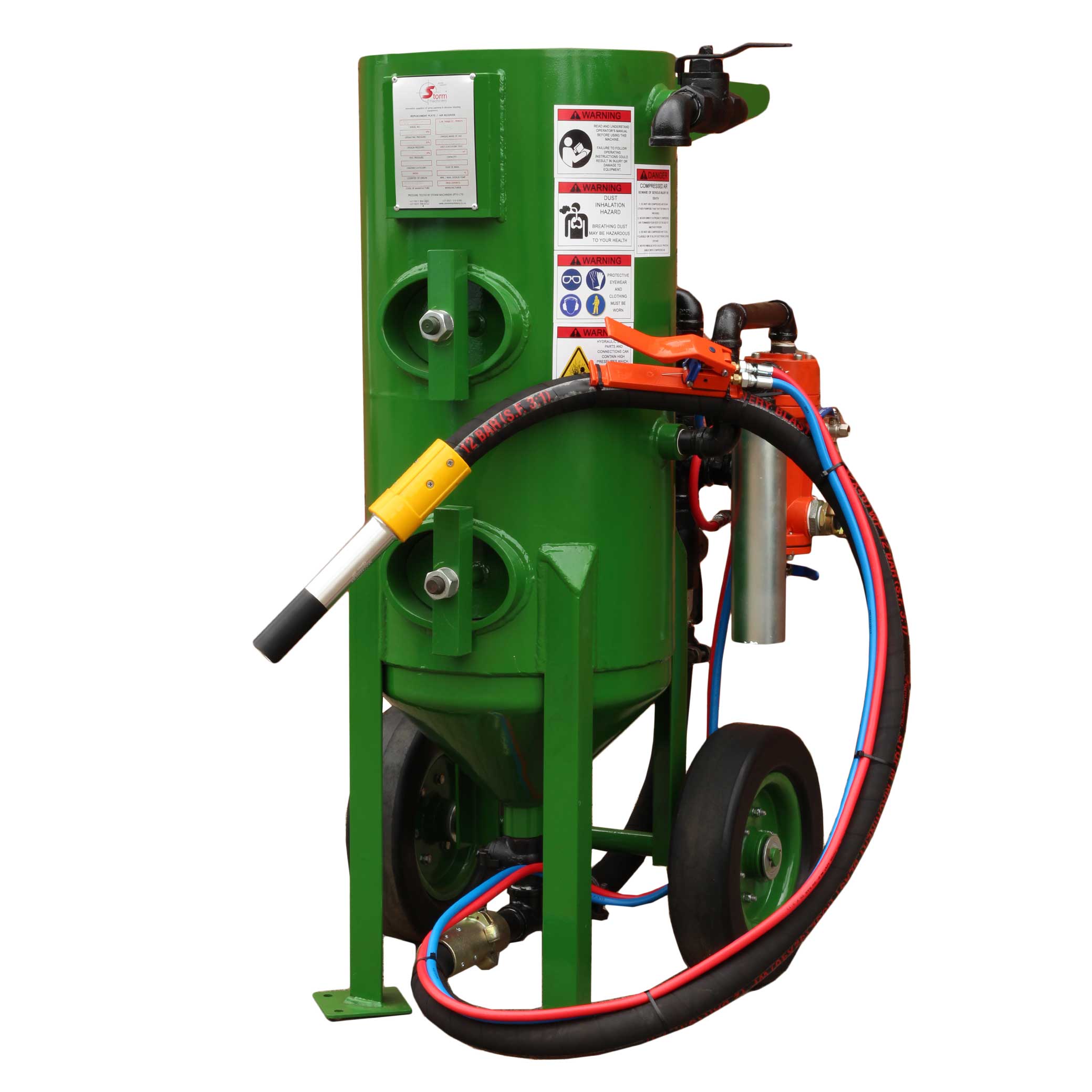
Double Chamber Blast Pots
Double chamber blast pot are ultra high-production blast pots ideal for continuous industrial blasting.
Sizes & Specifications
Available in the following sizes:
Double Chamber | 120L Double Chamber | 300L Double Chamber |
 |  | |
Diameter | 400 mm | 610 mm |
Height | 1200 mm | 1550 mm |
Length | 8000 mm | 920 mm |
Width | 510 mm | 830 mm |
Weight | 120 kg | 360 kg |
Outlet | 1 | 2 |
Blast Nozzle | 8 / 9.5 / 11 / 12.5 | 8 / 9.5 / 11 / 12.5 |
Blast Hose | 32 / 38 | 32 / 38 |
Nozzle Selection
(Incl. helmet air)
Nozzle Size | 6.5 mm | 8 mm | 9.5 mm | 11 mm | 12.5 mm |
Approximate CFM | 100 CFM | 150 CFM | 215 CFM | 270 CFM | 335 CFM |
Learn more about our blast nozzles
Learn more about our blast hose
Advantages
All pots are pressure tested and manufactured with only high quality materials ensuring safety and reliability.
Double chamber blast pots are up to 35% faster than single chamber blast pots.
Double chamber blast pots are an economic alternative to bulk blasters.
Eliminates re-filling downtime.
Manual vs. Remote Blast Pots
1. Manual Blast Pots
Manual blast pots require 2 operators. This includes a blast pot operator and a blast nozzle operator. The blast pot operator operates the physical setting of the blast pot (i.e. start compressor/fill pot/start & stop operation of pot), while the nozzle operator will perform the physical task of abrasive blasting (according to the specific job/application).
Because manual blast pots have fewer working parts (i.e. manual valves) they require an additional operator.
2. Remote Blast Pots
Remote blast pots require only 1 operator. A remote control valve and deadmans handle are installed in remote blast pots. This allows a single operator to start the compressor, fill the blast pot and, when ready, proceed to start/stop the blast pot by pressing down and releasing the deadmans handle.
Remote blast pots contain more working parts than manual blast pots and may require additional spare parts and maintenance.