
Whether you call it sandblasting sand, blasting grit or blasting media, the abrasive is the part of the job that actually touches the steel. Its shape, size and hardness decide what the blast leaves behind: a sharp anchor pattern ready for coating, a smooth satin finish on soft metal or, with the wrong material, a cloud of hazardous dust.
Storm Machinery supplies silica-free blasting abrasives to contractors, fabricators and workshops across South Africa: an angular mineral slag grit for steel preparation, and spherical glass beads for cleaning and finishing. Both come with downloadable product data sheets, and our team, who have advised on surface preparation since 1990, can help you match a grade to your coating spec.

OUR BLAST POTS
Showing all 2 resultsSorted by popularity
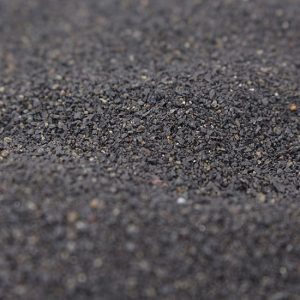

What Is Sandblasting Sand?
Sandblasting sand is the everyday name for abrasive blasting media: the loose, granular material a blast pot or blast cabinet fires at a surface to clean it or roughen it. Despite the name, today’s blasting abrasives are rarely sand at all. Natural silica sand was dropped because its dust damages the lungs, and purpose-made media such as mineral slag, glass, garnet and steel have taken its place, each picked for its hardness, shape and low free-silica content.
Grit Size Sets The Profile, And The Paint Bill
Most coating data sheets specify a surface profile range in microns, and the abrasive’s particle size is one of the biggest levers for hitting it. Too fine, and the blast cuts a shallow anchor the coating struggles to grip. Too coarse, and the peaks stand taller than the spec allows: the extra height has to be filled with paint before the film reaches its specified thickness, and the tallest peaks can poke through a thin coat and rust first.
That’s why it pays to match the grade to the coating spec rather than buying whatever grit is on the shelf. The saving shows up at the painting stage, in paint used and in coating life.
Our Abrasives: Specs You Can Check
- Each abrasive has a downloadable product data sheet, so you can check particle size, profile and composition against your project specification before you order.
- Our Mineral Slag data sheet reports results against the SSPC-AB 1 criteria for mineral and slag abrasives, including free silica below 1%, moisture below 0.5% and an angular particle shape.
- Our Glass Beads are made from lead-free soda-lime glass with no free silica.
- The same team that supplies Storm’s blast pots and blast cabinets can match an abrasive to your equipment, not just to the surface.
- A safety data sheet is available for each abrasive, ready for your site file.
Buyer's Guide: Matching An Abrasive To Your Surface
Mineral Slag
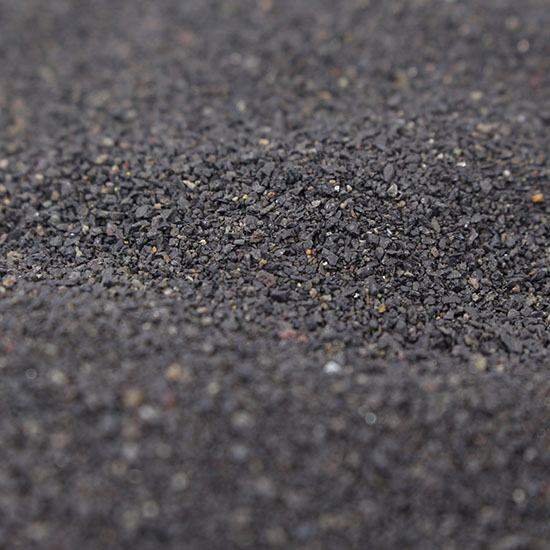
For steel that’s being prepared for a protective coating, our Mineral Slag is the workhorse: a sharp, angular grit made from chrome slag that cuts the anchor profile coatings rely on. It’s a single-use abrasive, blasted once and then collected, which suits open site work and fabrication yards where recovering media isn’t practical. It’s also the abrasive the vast majority of our customers run through dustless blast pots. Two grades cover most coating specs:
Grade | Particle size | Profile achieved |
|---|---|---|
AGT 60 | 0.85–1.0 mm | 40–80 µm |
AGT 90 | 1.0–2.0 mm | 80–110 µm |
Both grades are rated on the data sheet as capable of Sa 3, the highest visual cleanliness grade. Mineral Slag is supplied in 25 kg bags, or in 1.5 tonne bulk bags packed as 25 kg bags.
Glass Beads
For soft metals, precision parts and cosmetic finishes, our Glass Beads clean without cutting. Each bead is a smooth sphere, so it peens the surface rather than gouging it: it lifts scale, discolouration and light corrosion, leaves a bright satin finish and doesn’t change a part’s dimensions. Glass beads work on any metal, but they’re most often chosen for aluminium, brass and machined or forged parts, where peening also leaves a compressive layer at the surface that helps resist fatigue.
Glass beads are tough enough to be recovered and reused, which makes them a natural fit for a blast cabinet. Two sizes are available: as a rule of thumb, AB (200-300 µm) for finer finishes and BL (400-800 µm) for faster cleaning. One thing glass beads won’t do is cut an anchor profile, so a part heading for a protective coating needs an angular abrasive instead.

Quick Reference Block - Which Abrasive For Which Job
- Structural steel, tanks or pipework being prepared for coating → Mineral Slag
- Coating spec calls for a 40-80 µm profile → Mineral Slag AGT 60
- Coating spec calls for an 80-110 µm profile → Mineral Slag AGT 90
- Open site blasting where media can’t be recovered → Mineral Slag
- Dustless (water-injected) blast pot → Mineral Slag
- Aluminium, brass, or machined and forged parts → Glass Beads
- Satin finish with no change to part dimensions → Glass Beads
- Blast cabinet that recycles its media → Glass Beads
- Finer finish → Glass Beads AB
- Surface needs an anchor profile for paint → an angular abrasive only (Mineral Slag), never glass beads
FAQs
What sand should I use for sand blasting?
Use a silica-free blasting abrasive rather than natural sand. To prepare steel for coating, an angular grit such as our Mineral Slag cuts the anchor profile the paint needs. To clean and finish soft metals, glass beads give a smooth satin finish without cutting into the part.
Can I use river, builder's or beach sand for sandblasting?
No. Natural sand is usually rich in crystalline silica (quartz), and blasting shatters it into fine dust that can be breathed deep into the lungs. The UK prohibits blasting with any substance containing 1% or more free silica, and the US occupational health institute NIOSH has recommended banning silica sand as a blasting abrasive since 1974. In South Africa, crystalline silica is regulated as a hazardous chemical agent under the Occupational Health and Safety Act. Beach sand can also carry salt onto steel that’s about to be coated. Whatever the abrasive, operators still need proper abrasive blasting PPE.
Is blasting grit the same as sandblasting sand?
In everyday use, yes: sandblasting sand, blasting grit, blasting media and blasting abrasive all describe the loose material fired through a blast nozzle. Strictly speaking, “grit” means angular particles that cut a profile, while “shot” and “beads” are round particles that peen and polish instead. Our Mineral Slag is a grit; our Glass Beads, as the name says, are beads.
Can blasting abrasive be reused?
It depends on the abrasive. Mineral Slag is designed as a single-use abrasive: it’s blasted once and then collected for disposal. Glass Beads hold their shape well enough to be recovered and reused, which is why they’re usually run in a blast cabinet. Recovered media should be screened to remove dust and debris before it goes back in.
Do blasting abrasives need to be tested?
Many coating specifications require it, especially on large or critical projects. Typical checks cover moisture, oil and water-soluble salts, because contaminated abrasive transfers that contamination onto clean steel. For the salt check, our DeFelsko PosiTector SST Abrasives Test Kit measures soluble salts by conductivity, to ASTM D4940 and ISO 11127-6, on site or in the lab. How often you test depends on the project specification. Our Mineral Slag data sheet lists results for each of these properties, a useful baseline for your QC records.
How should I store blasting abrasive?
Keep bags sealed, off the floor and under cover. Abrasive is supplied dry (Mineral Slag’s data sheet specifies under 0.5% moisture), and once it picks up moisture it feeds unevenly and can block the pot’s grit valve.
Do you deliver sandblasting abrasives?
Yes. Orders are dispatched promptly from our Johannesburg warehouse and delivered to your site or workshop, in 25 kg bags or, for Mineral Slag, 1.5 tonne bulk bags. Delivery is charged separately, so include your delivery address when you request a quote and we’ll confirm the cost.
Can Storm help me choose the right abrasive?
Yes. Send us your coating data sheet or project specification, plus the surface you’re blasting, and our team will recommend an abrasive and grade. Contact our Boksburg (Johannesburg), Durban or Cape Town branch, or use the Request a Quote button on either product page.
Complete Your Setup
The right abrasive is only part of a good blast. The equipment that fires it and the gauge that checks it finish the job.
The Machine Behind The Media: Blast Pots
On open steelwork, Mineral Slag runs through a blast pot. Browse our pressure-tested dry and dustless blast pots to find the right setup for your site.
Contained Finishing: Blast Cabinets
Glass beads earn their keep when they can be recovered. Our suction and pressure blast cabinets keep the media contained so it can go round again.
After The Blast: Surface Profile
Once the blast is done, a surface profile gauge confirms whether the grade you chose actually delivered the profile your coating spec asks for.