
Moisture is one of the most common, and most preventable, causes of coating failure. If a coating is applied while the surface temperature is too close to the dew point, condensation can form beneath the coating before it’s even cured – leading to flash rusting, poor adhesion, and premature failure that only shows up months later, when it’s too late to fix.
Storm Machinery is DeFelsko’s representative in South Africa, so the environmental monitoring instruments on this page are supplied, serviced and calibrated locally through our authorised DeFelsko service centre. Dew point meters, hygrometers, and infrared thermometers let inspectors confirm that surface preparation, application, and cure are all happening within safe climatic conditions – not just at the start of the job, but throughout it. Whether you call it a dew point meter, a hygrometer, or a temperature and humidity meter, it’s measuring the same critical relationship between surface temperature and moisture in the air.
OUR INSPECTION EQUIPMENT
Showing all 3 resultsSorted by popularity

Why It Matters: The Rule Every Coating INspector Should Know
The general rule every inspector should know: surface temperature needs to stay comfortably above the dew point – this is the “safe to paint” margin.
This isn’t just a rule of thumb – it’s written into recognised standards, most commonly ISO 8502-4 and ASTM D3276, which cite a minimum margin of 3°C (5°F). SSPC-PA7 and IMO PSPC reference similar requirements. But the exact figure isn’t universal: the required margin can differ depending on which standard your project specifies, so this number should always be treated as a starting guideline, not a substitute for checking the actual specification you’re working to.
The reasoning behind the rule is simple: if a surface cools to within that margin of the dew point, invisible moisture can condense on it – often without any visible sign – and get trapped beneath the coating as it cures. The result is flash rusting and adhesion failure that may not surface as a visible problem until long after the job is signed off.
This margin needs to hold across all three critical phases of a coating job: surface preparation, application, and cure – not just at the moment the crew starts spraying. Conditions can shift meaningfully between morning and afternoon, especially outdoors, which is exactly why continuous or repeated monitoring matters more than a single reading at the start of the shift.
About Defelko's Environmental Equipment
DeFelsko’s environmental monitoring instruments are built to conform to the standards inspection reports are measured against – including ISO 8502-4, ASTM D3276, BS 7079-B4, SSPC-PA7, IMO PSPC, and US Navy NSI 009-32. As an authorised DeFelsko service and repair centre, Storm Machinery keeps your instrument’s calibration current locally, with certification traceable to NIST.
If your specification names a standard and you’re not sure which instrument satisfies it, ask us before you buy – that’s exactly the kind of question our team fields daily.
Buyer's Guide - Selecting your Equipment
PosiTector Dew Point Meter
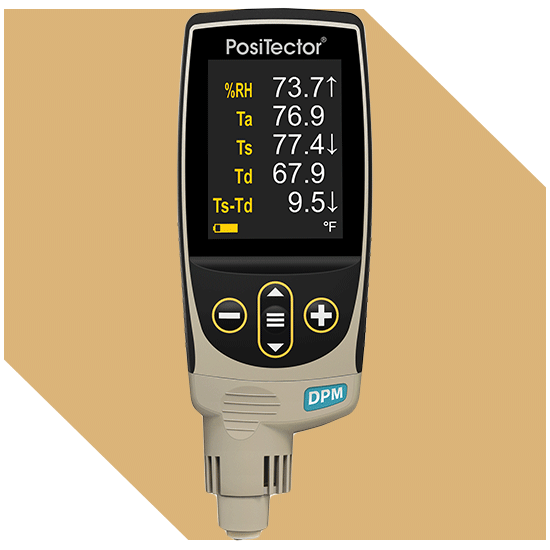
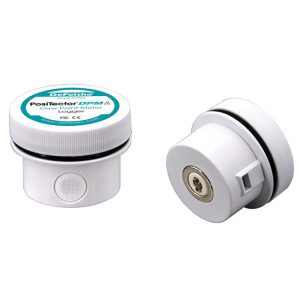
For on-the-spot readings during surface prep and application, our Dew Point Meter – also known as a hygrometer, or a temperature and humidity meter – measures relative humidity, air temperature, and surface temperature, then calculates dew point and the critical delta value between surface and dew point temperature – the number that determines whether it’s safe to proceed.
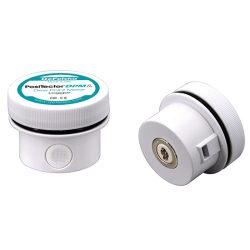
PosiTector Dew Point Meter Logger
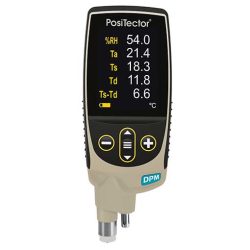
For unattended monitoring over hours or days, our Dew Point Meter Logger attaches directly to the structure and records climatic conditions independently – useful on larger projects where conditions need to be tracked continuously across a shift, or overnight, rather than checked manually at intervals.
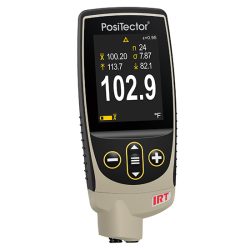
PosiTector Infrared Thermometer
For hard-to-reach, moving, or very hot surfaces where a direct-contact probe isn’t practical, our Infrared Thermometer reads surface temperature from a distance – including freshly sprayed powder coating and surfaces above the range of standard contact sensors.
Quick Reference: Which Instrument for Which Job
- Standard on-site readings during prep or application: Dew point meter – measures RH, air temperature, surface temperature; calculates dew point and delta.
- Continuous, unattended monitoring over a shift or several days: Dew point meter logger.
- Hard-to-reach, moving, or very hot surfaces: Infrared thermometer (non-contact).
- Compressed air systems (for spray-applied coatings): Dew point meter fitted with the DPMD probe, purpose-built for measuring dew point inside compressed air lines.
The safe-to-paint rule: Keep surface temperature comfortably above the dew point throughout surface preparation, application, and cure. Commonly cited as at least 3°C (5°F) under ISO 8502-4/ASTM D3276, but always confirm the exact margin required by your project’s specification.
Standards this instrument range conforms to: ISO 8502-4, ASTM D3276, BS 7079-B4, SSPC-PA7, IMO PSPC, US Navy NSI 009-32.
FAQs
When is it safe to apply a coating?
As a general guideline, surface temperature should stay comfortably above the dew point throughout surface preparation, application, and cure – commonly cited as a minimum of 3°C (5°F) under ISO 8502-4 and ASTM D3276. The exact margin required can vary depending on which standard your project specifies, so it’s worth confirming the figure in your own specification rather than relying on this number alone. If conditions are closer than the required margin, or trending that way, there’s a real risk of moisture condensing on the surface – often invisibly – and getting trapped under the coating.
Why does dew point matter more than just checking if it's raining?
Condensation doesn’t need visible rain or fog to form. If a substrate’s surface temperature drops close enough to the dew point, moisture condenses directly onto it, even under a clear sky – which is why relying on visual judgement alone isn’t enough for a specification-driven job.
Can environmental conditions change during the day?
Yes, often significantly – direct sun, shade, wind, and even the shape and mass of the structure being coated can all shift surface temperature well away from ambient air temperature. This is why checking conditions once at the start of a shift isn’t always sufficient; conditions should be monitored across the job, not just at the outset.
Why would I need to measure dew point in compressed air?
Compressed air is used to atomise and apply many spray coatings, and moisture in that air can affect adhesion, gloss, and colour consistency. Our dew point meter’s DPMD probe is purpose-built for measuring dew point inside compressed air lines, catching moisture issues before they affect the finish.
How often should an environmental monitoring instrument be calibrated?
As with other inspection instruments, annual calibration is the standard recommendation. That said, some project specifications call for a different interval, so it’s worth checking your specific requirements rather than assuming annual applies across every job. Storm Machinery is an authorised DeFelsko service and repair centre, so calibration and certification happen locally with certificates traceable to NIST.
Is a hygrometer the same as a dew point meter?
Yes – “hygrometer,” “dew point meter,” and “temperature and humidity meter” are all used to describe the same category of instrument, measuring relative humidity, air and surface temperature, and calculating dew point. Note this is different from a “moisture meter,” which usually refers to a separate instrument for checking moisture content within a material like concrete or wood, rather than atmospheric conditions.
Complete Each Stage of Your Inspection
Environmental conditions don’t exist in isolation – they’re the backdrop against which every other inspection step happens. At Storm Machinery, we supply the instruments for each stage of the process, not just the one that checks the climate around it.
BEFORE APPLICATION - SURFACE PROFILE
A correctly blasted anchor profile still needs the right conditions to hold up once coated. See our Surface Profile Gauges for that earlier step in the same quality control sequence.
AFTER APPLICATION - COATING THICKNESS
Once conditions are confirmed safe and the coating goes on, the next check is dry film thickness. See our Coating Thickness Gauges for that stage.