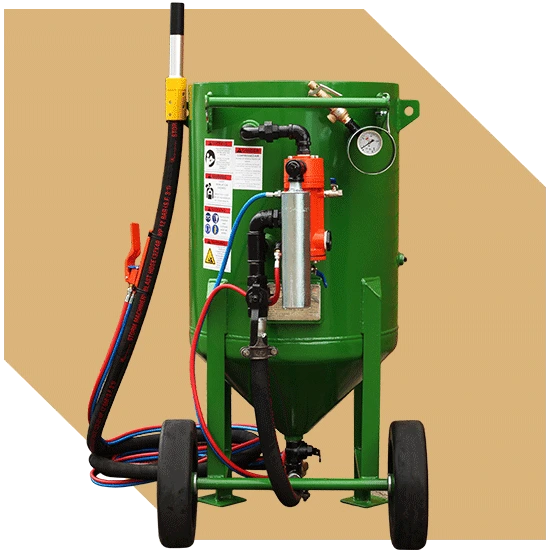
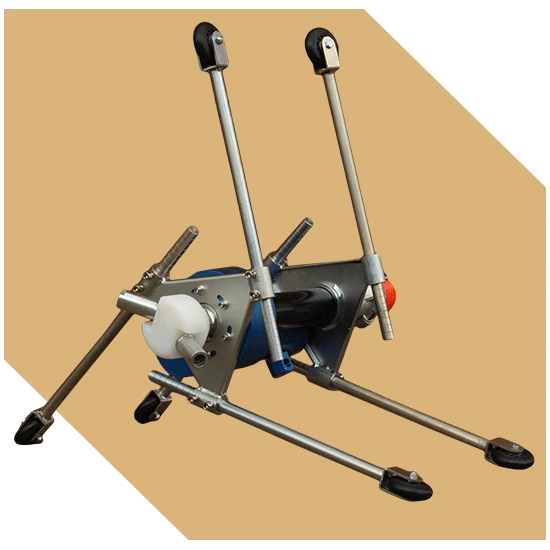
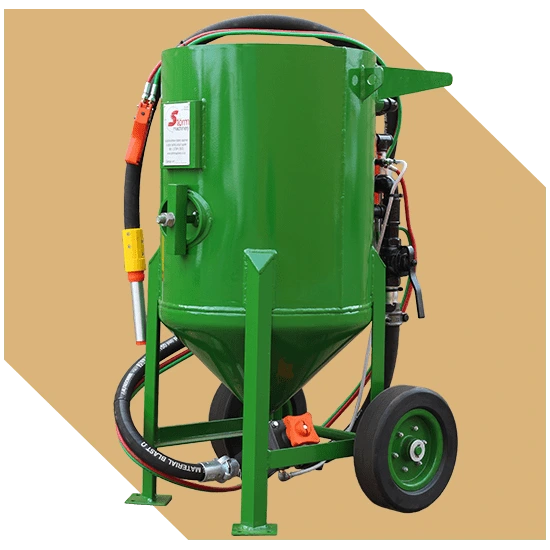
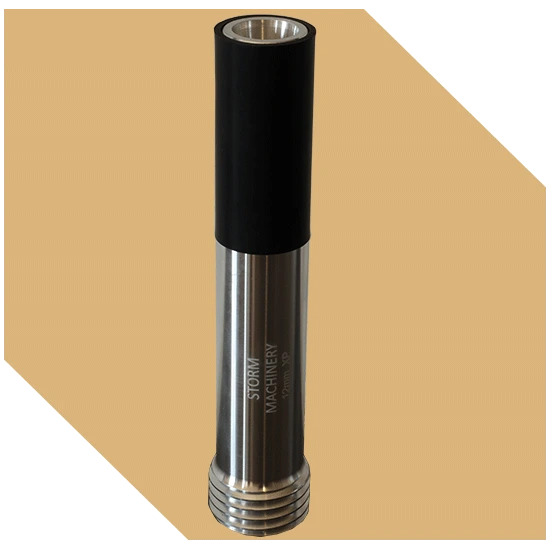
Storm Machinery’s sandblasting equipment and blast pots are renowned for their reliability and versatility. Each blast pot is verified and complies with SANS 347 pressure equipment regulations. Each sandblaster comes complete with a logbook and should be pressure tested every two years.
What is sandblasting / grit blasting?
Abrasive blasting (commonly known as sandblasting, sand blasting, shot blasting or grit blasting) is the process of accelerating abrasives through a blasting nozzle in a stream of compressed air. The abrasives act as ‘sand paper’ and clean the surface at a high speed.
SURFACE PREPARATION & SAND BLASTING
Surface preparation is the process of thoroughly preparing a substrate/surface for a coating using high pressure blasting. Poor surface preparation results in premature coating failure. Correct sand blasting and surface preparation is a crucial part of any coating application.
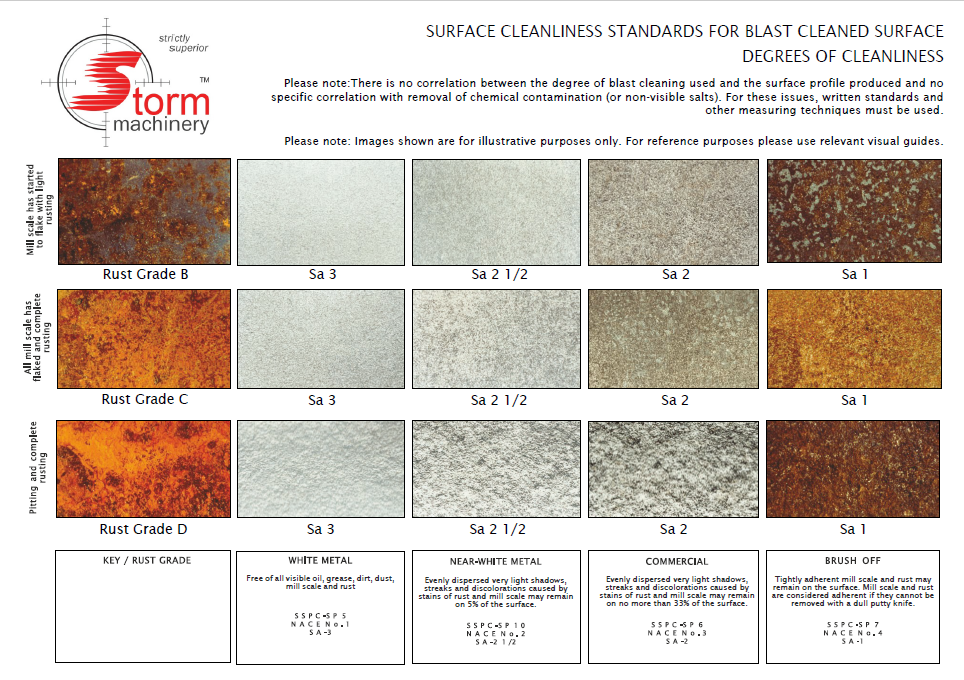
Sandblasting & Surface Cleanliness
Surface cleanliness is a pictorial standard that measures the visual cleanliness of a substrate. Download our Surface Cleanliness Chart. A paint data sheet refers to the surface cleanliness your coating requires
Dry vs. Water Sandblasting Equipment
Water blasting operates on a water blast principle. A water sand blaster is able to eliminate up to 95% of dust making them ideal for health and safety restraints. However, they are 30% slower than conventional sandblasting. Generally speaking, traditional grit blasting remains to be the most economic form of abrasive blasting. Read more about which sand blasting setup you require in our article Dustless vs conventional blasting; which will suit you? For assistance regarding which sandblasting equipment will work best for your application please feel free to contact one of our experienced sales engineers.
Abrasive Blasting & Surface Profile
Surface profile is, in essence, the roughness of a substrates surface. Heavy industrial coatings will not adhere to a flat, smooth surface. A surface profile / anchor pattern allows coating adhesion to take place. Poor preparation results in premature coating failure. The purpose of using a sand blaster and abrasive blasting in general is to create an anchor pattern.
Different abrasives create different profiles. A profile consists of peaks and valleys and is measured in microns with a surface profile gauge. A paint data sheet specifies the surface profile the coating will require.
What size compressor will you need for a sandblaster?
Grit blasting equipment (or sandblasting equipment) demands more from a compressor than any other air-driven tool. The size of the blast nozzle determines the volume of air required by the compressor. You can learn more about volume conversions in our article What size compressor will you need?
ABRASIVE BLASTING EQUIPMENT & COMPRESSED AIR
Using a sandblaster and working with compressed air is extremely hazardous and should be handled with utmost caution. Henceforth, it is vital that operators are aware of the danger complications that can arise from using compressed air.
Please keep in mind that compressed air is hot and can result in condensation inside the blast pot. If the grit gets wet it will result in clumps and will not be able to flow freely. When condensation takes place within a blast setup solutions include aftercoolers and water traps.
SAND BLASTer TRAINING
Storm Machinery offers OEM training for all grit blasting equipment / sandblasting equipment directly purchased from any Storm Machinery outlet. Please ensure that your operators are well-versed in operation and maintenance of their sandblaster. Additionally, please keep in mind that a sand blaster / sandblasting pot is a coded pressure vessel and must be pressure tested every 2 years.
SandBlasting MACHINE & Equipment maintenance
When using any type of abrasive blasting equipment consistently check the pots for wear. Worn parts affect performance. Keep in mind that everywhere abrasives travel there will be wear. Before using a sandblasting machine please check all components including the blast nozzle, blast hose, grit valve, and pop up valve.