
Dry blasting is the original, and still the most common, way to prepare a surface – propelling abrasive through compressed air to strip, clean, or profile steel before coating. It remains the most economical method available, and for most jobs, the fastest. What changes between one dry blast pot and another isn’t the core process – it’s how the pot is operated, and how long it can run before you have to stop.
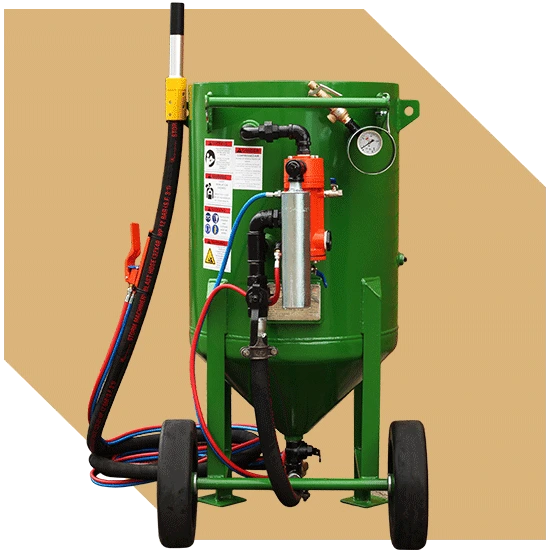
OUR BLAST POTS
Showing all 3 resultsSorted by popularity
Why the Deadman's Handle Matters, Even With a Full Crew
Best practice is to run two operators on any blast pot – manual or remote – one at the pot, one on the nozzle. So the real difference between the two isn’t headcount, it’s what happens if something goes wrong. A remote pot’s deadman’s handle is a trigger the nozzle operator has to actively hold down to keep the blast running. Release it – dropped, let go, or because the operator’s been knocked off balance – and the air supply to the pot cuts off automatically, without anyone else needing to react. Blasting doesn’t stop the instant the handle is released, though – there’s still air in the pot that needs to exhaust before it’s fully safe, so the blast tails off rather than cutting dead. A manual pot has no equivalent automatic mechanism at all: stopping the blast relies on the second operator manually closing a valve, which takes longer still and depends on clear communication between two people. That’s a genuine safety compromise, not just a difference in convenience, and it’s worth weighing before deciding which setup fits your crew.
SANS 347 Compliant, Backed by Storm
- Every dry pot in this range – manual, remote, or double chamber – is pressure tested in accordance with SANS 347, the South African National Standard that sets the rules for grouping and checking the safety of pressure equipment, not a certification in itself. Each is backed by a conformity assessment report declaring compliance with the Pressure Equipment Regulations (PER) and SANS 347.
- The Pressure Equipment Regulations set the default pressure test interval at every three years – the same interval that applies across our full range, dry and dustless. If the pot is used on a mine site, the Mining Act of South Africa requires testing every year instead. Confirm which applies to your site rather than assuming the general interval.
- Storm Machinery offers OEM training on all equipment supplied through us – a remote pot’s deadman’s handle and control valve are only as safe as the operator’s understanding of how to use them.
Buyer's Guide
All three of the products below run the same dry blasting process – what changes is the safety mechanism you’re operating with, and how long the pot can run before stopping.
Manual Blast Pots
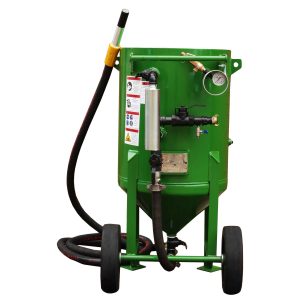
The simplest and most affordable setup, Manual Blast Pots run with two operators: one at the pot, one on the nozzle, the standard crew for either type of dry pot. Fewer moving parts than a remote setup means less that can go wrong and less routine maintenance. What it doesn’t have is a deadman’s handle – stopping the blast relies on the second operator manually closing a valve rather than an automatic cutoff, a safety trade-off worth weighing against the running-cost advantage.
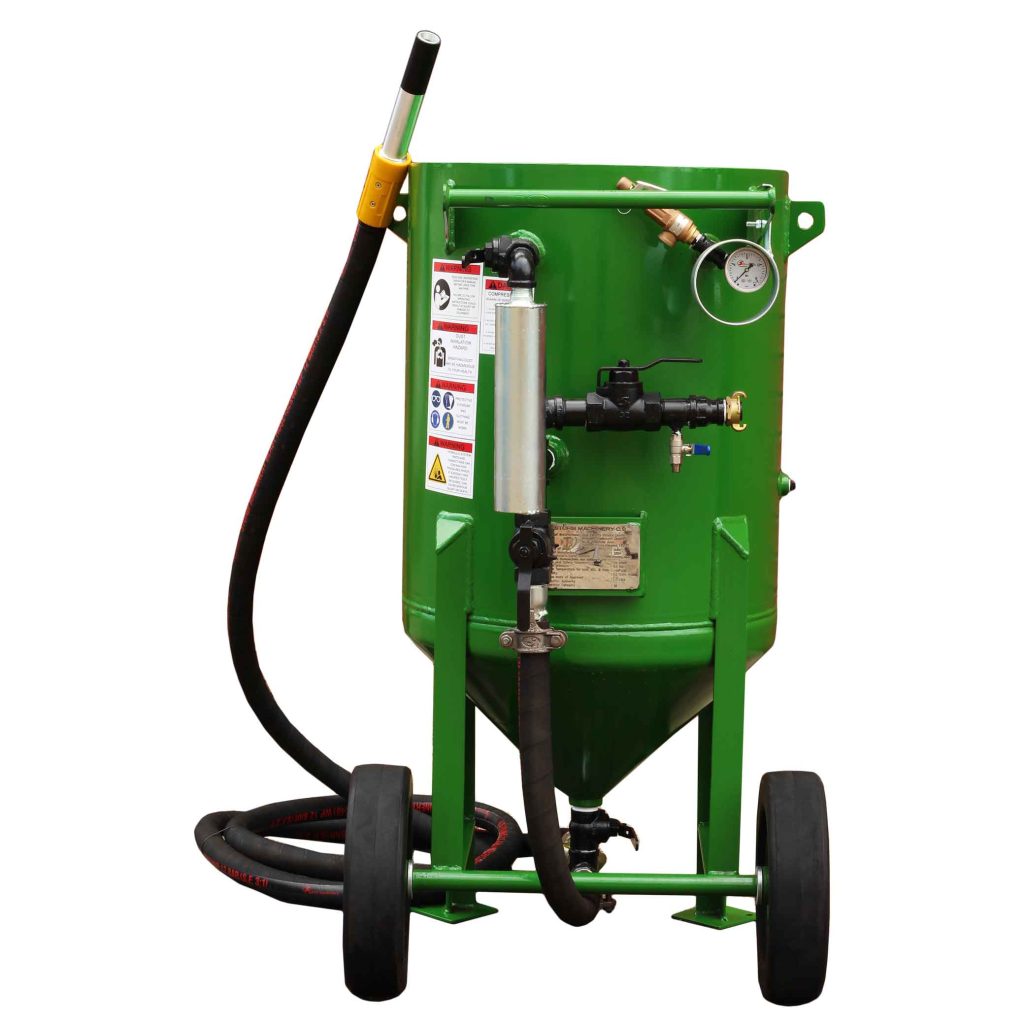
Remote Blast Pots
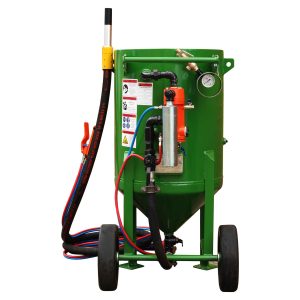
Remote Blast Pots still run best with two operators – the meaningful difference isn’t crew size, it’s the deadman’s handle. Paired with a remote control valve, it lets the nozzle operator start or stop the air supply directly, cutting it off automatically the moment it’s released – no reliance on a second person reacting in time. Residual air in the pot still needs to exhaust afterward, so the blast tails off rather than stopping dead, but the automatic cut-off itself is a genuine safety upgrade over a manual setup. The trade-off is more working parts, which can mean more spare parts and maintenance over the pot’s life.
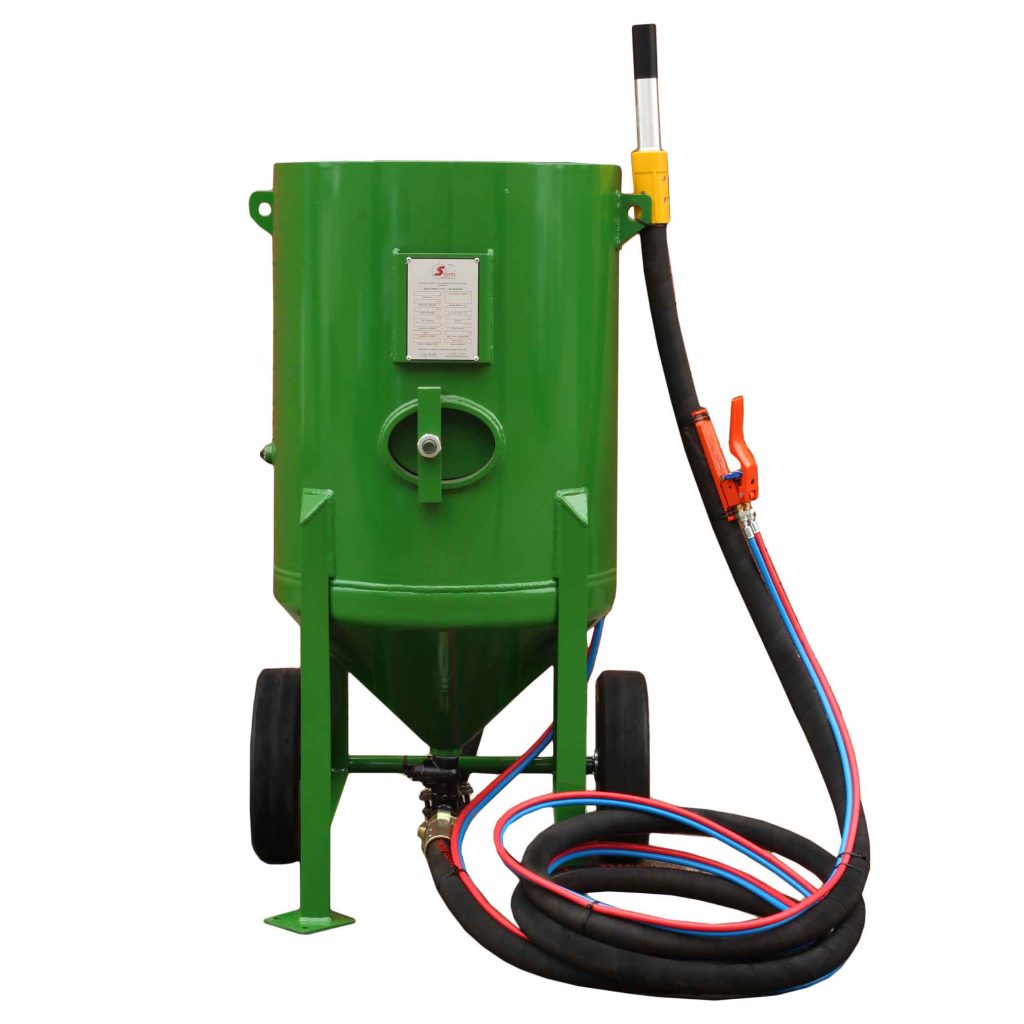
Double Chamber Blast Pots
Built for continuous industrial blasting rather than stop-start work, Double Chamber Blast Pots use two chambers so one can be refilled with abrasive while the other is still blasting. A single-chamber pot has to fully depressurise before it can be safely opened and refilled – venting a pressure vessel is a safety requirement, not just a convenience – and that’s exactly the pause a double chamber design avoids, since the second chamber is already pressurised and ready while the first is still discharging. Commonly cited as faster than a single-chamber pot over a full shift, though the exact gap depends on job conditions, so treat any specific percentage as a general guide rather than a fixed figure. The trade-off is a more complex pot to maintain, generally worth it only where continuous output matters more than upfront cost.
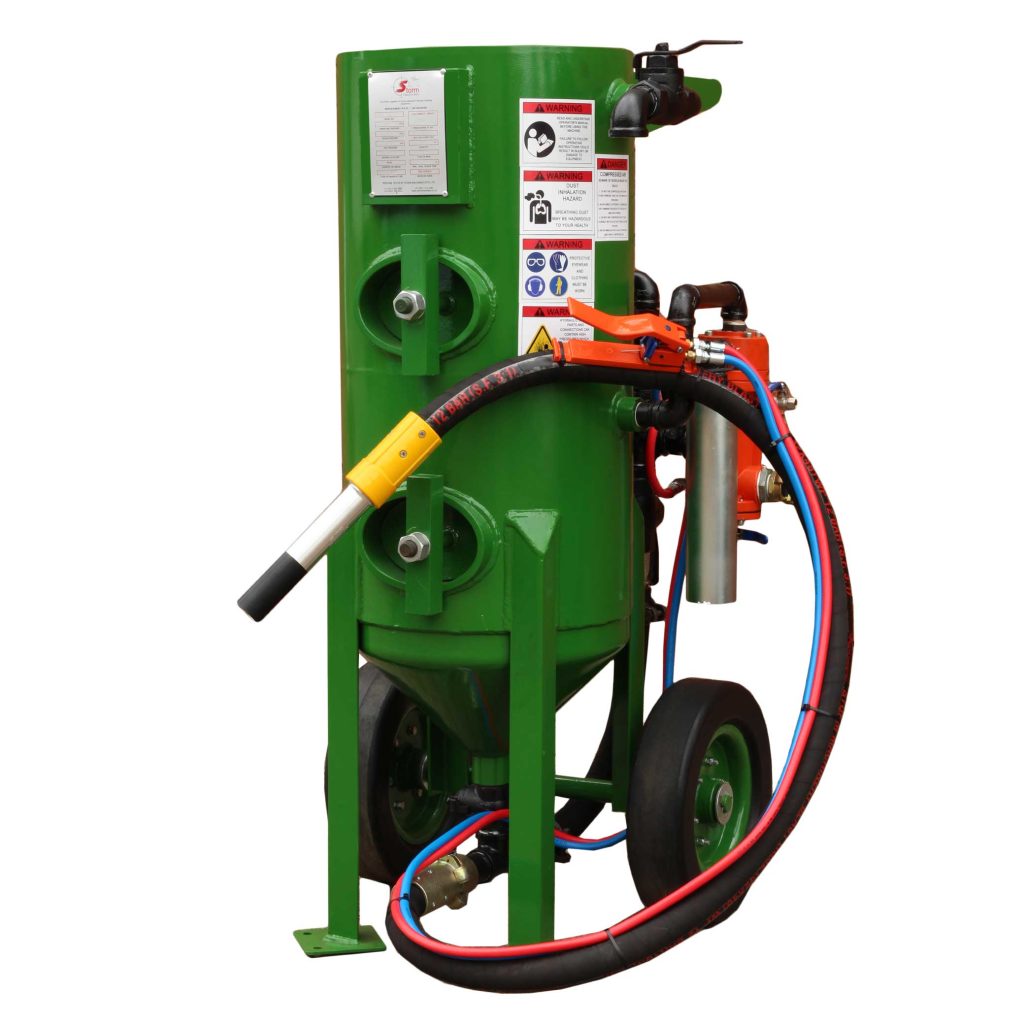
Quick Reference Block - Which Dry Blast Pot for Which Job?
- Standard two-operator crew, want the simplest and lowest-cost option → Manual Blast Pot
- Want the added safety of an automatic cut-off → Remote Blast Pot – the deadman’s handle cuts the air supply the moment it’s released, no second operator needed to react
- Continuous, high-volume industrial blasting with no downtime to refill → Double Chamber Blast Pot
- Want the lowest long-term maintenance → Manual Blast Pot, fewer moving parts than remote
- Operators are new to blast pot operation → Ask about Storm’s OEM training, especially before running a remote pot’s deadman’s handle unsupervised
FAQs
What's the difference between a manual and a remote blast pot?
Both are best run with two operators – one at the pot, one on the nozzle. The real difference is the deadman’s handle on a remote pot: it lets the nozzle operator cut the air supply the moment it’s released, rather than relying on a second person to manually close a valve.
What does a deadman's handle actually do?
It’s a safety trigger the operator holds down to keep the blast running. Release it – whether on purpose, by accident, or because the operator’s lost their footing – and the air supply cuts off automatically, with no need for a second person to react. It doesn’t stop the blast dead, though: there’s still air in the pot that has to exhaust before it’s fully safe, so the blast tails off rather than cutting instantly. A manual pot has no equivalent, relying instead on someone else manually closing a valve.
Do remote blast pots need more maintenance than manual ones?
Yes, generally. A remote pot has more working parts – the remote control valve and deadman’s handle among them – which can mean more spare parts and more routine maintenance over time compared to a simpler manual setup.
Is a double chamber blast pot worth the extra cost over a single chamber?
Only if continuous output genuinely matters for your job. The advantage is real – no stopping to depressurise and refill mid-shift – but it comes with a more complex pot to maintain. For occasional or lower-volume work, a single-chamber manual or remote pot is usually the more economical choice; save the double chamber for genuinely continuous, high-volume industrial blasting.
How often does a dry blast pot need to be pressure tested?
Every three years is the default, under the Pressure Equipment Regulations – the same interval that applies across our dustless range too. If you’re working on a mine, though, the Mining Act of South Africa requires testing every year instead. This is checked against SANS 347, the national standard covering how pressure equipment is grouped and safety-checked, and confirmed with a conformity assessment report. Confirm which interval applies to your site rather than assuming the general figure.
Is "dry blasting" the same as "conventional blasting"?
Yes – “dry blasting” and “conventional blasting” both describe the same process: propelling abrasive through compressed air with no water added. Different names, same equipment.
Do I need any special training to operate a remote blast pot safely?
Storm Machinery offers OEM training on all equipment purchased through us, and it’s worth taking seriously for remote pots specifically – the deadman’s handle and control valve are only as safe as the operator’s understanding of how and when to use them.
The Rest of the Job
Dry blasting rarely happens in isolation – the media you run, what the surface needs before coating, and the coating step itself all tie back to what’s below:
Match Your Media
Dry blasting isn’t limited to a narrow abrasive range the way a Slurry Blast Pot is. Browse our full range of abrasives and match grit type and size to the job.
Verify the Job
Once blasted and coated, confirm the result with surface profile gauges, environmental monitoring instruments, and coating thickness gauges.
Move to Coating
From a clean, profiled surface into airless spray painting equipment for large-scale work, or conventional spray equipment for smaller jobs.
Not sure whether dry or dustless is the right call for your site? That’s a broader decision – dust control versus speed and cost. Dustless vs Dry Sandblasting breaks it down in full, and our main Blast Pots page touches on it too. Everything above assumes you’ve already landed on dry and just need to work out which setup fits your crew.