
Every coating project lives or dies on what happens before the first coat goes on. A blast pot – the core piece of industrial sandblasting equipment behind any proper surface prep job – turns raw abrasive and compressed air into a controlled stream capable of stripping rust, mill scale and old coatings back to bare, profiled steel – the anchor pattern every industrial coating needs to bond properly. Get this stage wrong and no amount of paint quality further down the line will save the job.
Storm Machinery manufactures and supplies a full range of dry and dustless blast pots – or sandblasting pots, as they’re just as often called on site – to the South African market, with every unit pressure tested and issued with its own pressure vessel data pack before it leaves our workshop. Storm Machinery has been supplying surface preparation equipment to the South African market since 1990.
BROWSE OUR ABRASIVE BLASTING CATEGORIES
OUR BLASTING EQUIPMENT



Your Blast Pot Is a Pressure Vessel - Not Just a Tool
An abrasive blast pot isn’t simply blasting equipment; it’s a coded pressure vessel, and that changes what “buying the right one” actually means. Under SANS 347, every pressure vessel of this kind must be built, tested and logged to a defined standard – and that obligation doesn’t end at the sale. The pot needs a pressure vessel data pack, and it needs to be pressure tested at set intervals for as long as it’s in service. A supplier who can’t produce a test certificate and a proper data pack with the unit isn’t just cutting a corner on paperwork – they’re handing you a liability the day something goes wrong on site. It’s a detail almost none of the equipment suppliers in this market talk about, and it’s exactly the detail a site safety officer or project engineer will ask you for.
Blast Pot Standards and Compliance
- All Storm Machinery blast pots are built and pressure tested in line with South Africa’s Pressure Equipment Regulations, made under the Occupational Health and Safety Act, and to SANS 347.
- Pressure testing is carried out in-house at Storm Machinery, not outsourced to a third party – so accountability for your blast pot’s compliance stays with us.
- Every pot is supplied with its own pressure vessel data pack, as required for a coded pressure vessel.
- The commonly cited guideline is a pressure test every three years – though the exact interval can be set by your specific project specification or insurer, so always check what’s actually required on your job before assuming the general rule applies.
- Storm Machinery offers OEM training on all equipment purchased through us, so your operators aren’t just handed a blast pot and left to figure it out.
Dry vs. water sandblasting equipment
Water blasting operates on a water blast principle. A water sand blaster is able to eliminate up to 95% of dust making them ideal for health and safety restraints. However, they are 30% slower than conventional sandblasting. Generally speaking, traditional grit blasting remains to be the most economic form of abrasive blasting.
Read more about which sand blasting setup you require in our article Dustless vs Dry Sandblasting. For assistance regarding which sandblasting equipment will work best for your application please feel free to contact one of our experienced sales engineers.
Buyers Guide
Dry Blast Pots
For most industrial and commercial surface prep work, a conventional dry blast pot is the faster and more economical choice – it’s the setup most contractors reach for first, and it remains the standard against which every other method gets compared.
Dustless Blast Pots
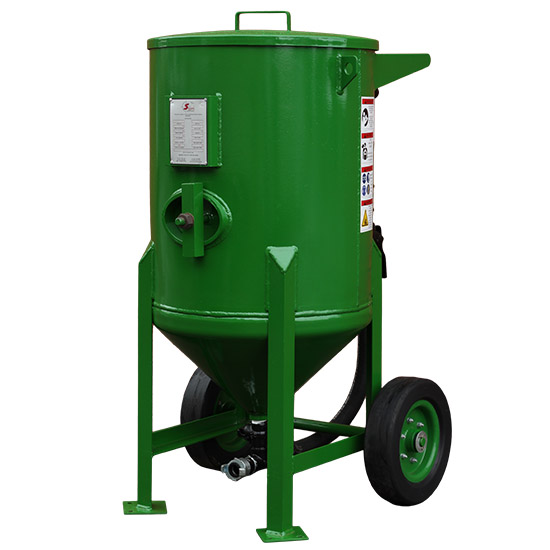
Where dust is the deciding factor – confined sites, populated areas, strict health and safety requirements – a dustless blast pot setup controls the vast majority of airborne dust by introducing water into the blast stream, at some cost to blasting speed.
Not sure which one fits your project? See the Quick Reference below, or read our full breakdown in Dustless vs Dry Sandblasting.
Blast Pot Components & Accessories
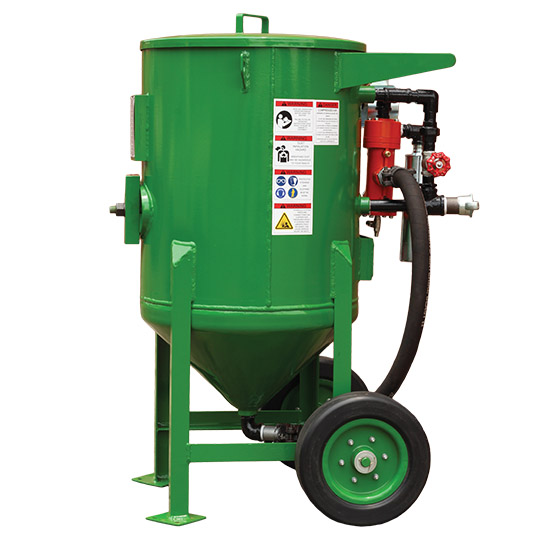
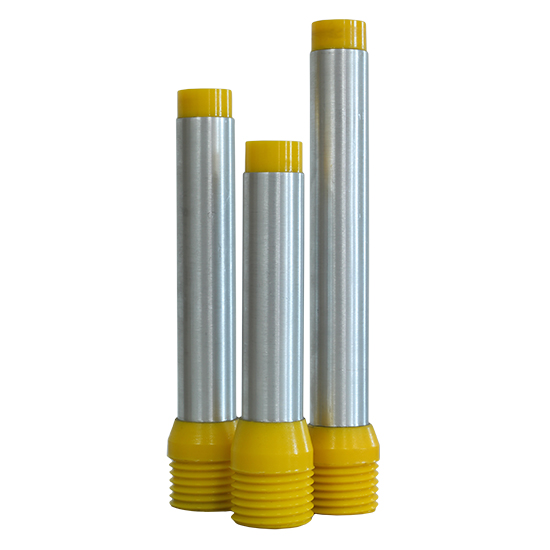
Every pot is only as good as what’s attached to it. Browse blast nozzles, blast hose & couplings, grit valves, control valves, pop up valves, and deadman’s handles under Blast Pot Components. Additionally, extend what your pot can do with add-ons like pipe blasting fittings, lids, and sieves under Blast Pot Accessories.
What Is Sandblasting?
Sandblasting and grit blasting are the same process – abrasive media accelerated through a nozzle using compressed air, whether you call the equipment a blast pot, a sandblasting machine, or a sandblaster. The two names simply reflect which abrasive is loaded into the pot: “sandblasting” for sand, “grit blasting” for steel grit. Shot blasting is a different process, not just a different name for the same one – rather than a blast pot and compressed air, shot blasting equipment uses a spinning centrifugal wheel to fling steel shot at the surface, and is typically built into enclosed or automated systems rather than the portable equipment covered on this page.
The term “sandblasting” actually comes from the material’s original form – river sand. Once the health risks of the free silica it contains became clear (silica dust causes silicosis, a serious and irreversible lung disease), silica sand was phased out and banned in several countries as an abrasive. Today, safer alternatives are used instead.
Why We Sandblast?
Correct surface preparation is what determines whether a coating lasts or fails prematurely, and it comes down to two things a blasted surface needs to achieve:
1. Surface Cleanliness
A surface has to be visually free of rust, mill scale, and failing coating residue before anything gets painted over it – a coating applied over contamination will fail regardless of how well the surface is otherwise prepared. See our surface cleanliness guide for what to look for and the standards involved.
2. Surface Profile
Blasting also has to leave the right “anchor pattern” for the coating to bond to – too smooth, and there’s nothing for the coating to hold onto. Different abrasives produce different profiles, and getting this measurement right is its own detailed topic. See our full guide on Surface Profile for how it’s measured, which instrument to use, and the standards that apply.

Compressed Air & Compressor Sizing
Grit blasting places more demand on a compressor than almost any other air tool on site – and it’s the volume of air (CFM) your nozzle needs, not the compressor’s pressure rating (bar), that actually determines whether it’s big enough for the job.
For the full nozzle-by-nozzle CFM breakdown and an interactive calculator to size your compressor, see our complete guide: What Size Compressor Will You Need for Sandblasting?
Compressed air also carries a real safety risk, and condensation inside the pot is a genuine operational problem – wet grit clumps and stops flowing freely. Aftercoolers and water traps solve this.
Quick Reference - Which blast pot setup for which job?
- Standard industrial or commercial site, dust not a major concern → Dry blast pots, single or double chamber
- High-volume, continuous production blasting → Double chamber dry blast pot (up to 35% faster than single chamber)
- Site near occupied buildings, confined space, or strict dust regulations → Dustless (water-injected) blast pot
- Existing dry pot, want to add dust control without buying a new pot → Vapour injection kit or water injection nozzle from our dustless range, not a full replacement pot
- Budget and speed are the priority, dust control is not → Dry blast pots remain the more economical option
- Operator safety and fatigue are priorities → Remote-controlled dry blast pot – the stop-start deadman’s handle lets the operator control blasting from the nozzle end, cutting both safety risk and physical fatigue over long shifts
Sandblasting Machine & Equipment Maintenance
Everywhere abrasive travels, wear follows – and a worn component quietly costs you performance long before it fails outright. Before using a sandblasting machine, check the blast nozzle, blast hose, grit valve, and pop up valve for wear – any one of them can throttle output or create a safety issue if left unchecked.
Sand blaster training
Buying the right pot only gets a project halfway there. An operator who isn’t properly trained on it will wear it out faster, or worse, create a safety incident. Storm Machinery offers OEM training on all equipment purchased directly from us – and since a blast pot is a coded pressure vessel, that training covers the compliance side, not just day-to-day operation.
Servicing, Repairs and Pressure Testing
Buying a blast pot from Storm Machinery isn’t a once-off transaction. We carry out repairs and supply replacement parts for the pots and components we sell, and since a pressure vessel needs retesting for as long as it’s in service, we remain your ongoing service partner for that too – not just at the point of purchase, but every time your logbook calls for another test.
FAQs
What is a blast pot used for?
A blast pot stores abrasive media and releases it into a compressed air stream, allowing an operator to strip and profile a surface for coating. It’s the core equipment used in sandblasting and surface preparation.
Is sandblasting the same as grit blasting?
Yes, effectively – sandblasting and grit blasting use the same process and equipment, just named after the abrasive loaded into the pot: sand historically, steel grit today. Shot blasting is genuinely different, not just a different name for the same thing – it uses a spinning centrifugal wheel rather than a blast pot, and isn’t the type of equipment covered on this page. On the equipment side, a blast pot, sandblasting pot, sandblasting machine and sandblaster are all names for the same gear.
Can you blast with steel shot in a blast pot?
Yes, though it’s a specific, contained application rather than common practice – mainly used for blasting trucks and trailers inside a purpose-built blast room, where the steel shot can be recovered and reused rather than scattered on an open site. Because steel shot is round rather than angular, it doesn’t cut an anchor profile into the surface the way grit does – it achieves a level of surface cleanliness (typically Sa 2.5) rather than a measurable profile. This is separate from shot blasting equipment in the traditional sense, which uses a spinning centrifugal wheel rather than a blast pot at all.
Should I get a dry blast pot or a dustless blast pot?
Dry blast pots are faster and more economical for most jobs. Dustless (water-injected) blast pots are the better choice when dust control is a health, safety, or site-access requirement, at some cost to blasting speed.
How often does a blast pot need to be pressure tested?
The commonly cited interval is every three years, in line with SANS 347 pressure vessel requirements. This can vary depending on your specific project specification or insurer, so it’s worth confirming the exact requirement for your site rather than assuming the general interval applies.
What size air compressor do I need for sandblasting?
It depends on your nozzle size, not the size of your blast pot – a 6.5 mm nozzle needs roughly 96 CFM, while a 12.5 mm nozzle needs roughly 338 CFM. It’s the volume of air (CFM) that matters here, not the pressure rating (bar) – a high-pressure compressor that can’t supply enough volume still won’t be big enough for the job.
What's the difference between a single chamber and double chamber blast pot?
A single chamber pot needs to depressurise to refill with abrasive, pausing the blasting process. A double chamber pot has a second chamber that refills while blasting continues, making it roughly 35% faster in continuous operation..
Does my blast pot come with a pressure vessel datapack?
Yes – as a coded pressure vessel, every Storm Machinery blast pot is supplied with its own pressure vessel data pack and pressure test certificate.
Is surface profile the same as surface cleanliness?
No – they’re two separate measurements, and a paint data sheet typically specifies both. Surface profile measures the peaks and valleys of the blasted substrate, while surface cleanliness measures how visually free it is of rust, mill scale, and old coating residue. A surface can meet its profile spec and still fail its cleanliness spec, or the reverse.
Complete Each stage of your surface preparation and coating projects
A blast pot is one link in a longer chain – media, application, and inspection all have to work together for a project to actually hold up over time. Storm Machinery supplies and supports every stage of that chain:
Abrasives
A blast pot is only as good as the media running through it. View our range of silica-free abrasives.
Coating Application - Industrial Spray Painting Equipment
Once the surface is profiled, move to airless spray painting equipment for large-scale work, or conventional spray equipment for smaller jobs.
Quality Control - Surface & Coating Inspection
A project that isn’t closely monitored by an inspector at every stage can turn a straightforward job into a costly one, once coating failure forces rework. Surface profile gauges are the natural next step straight off the back of a blast job, followed by environmental monitoring instruments to confirm conditions are right for coating, and coating thickness gauges to verify the finished application.