
BROWSE OUR AIRLESS SPRAY CATEGORIES
OUR AIRLESS EQUIPMENT
Showing 31–35 of 35 resultsSorted by popularity


What Is an Airless Paint Sprayer, and How Does It Work?
An airless paint sprayer is a machine that applies paint using high paint pressure instead of compressed air. Rather than mixing air into the paint stream to atomise it, an airless sprayer forces paint through the hose assembly and out through a small opening in the spray tip – called the orifice. Different paints atomise at different pressures – anywhere from 80 – 500 bar. This produces a fine, even fan pattern with less overspray and much faster coverage than air-based systems.
Airless paint sprayers come in three main types – electric, pneumatic, and hydraulic – each suited to different paint viscosities, project scales, and site power availability. For more information read our article What is Airless Spray?
WHAT ARE THE ADVANTAGES OF AIRLESS SPRAY EQUIPMENT
- Mobile system – can be easily transported for both outdoor and indoor applications
- Robust & durable design
- Up to around 70% transfer efficiency, compared with around 40% for conventional spray
- Limited overspray
- Unmatchable speed – spray up to half a square meter per second (depending on the spray tip size)
- Airless spray guns have large fluid sections and easily accessible filters
- Gun extensions can be fitted for hard-to-reach areas and improved painter comfort
- Wide range of tips allows user to easily adjust fan pattern
Buyer's Guide - Selecting Your Airless Paint Sprayer
Storm Machinery offers three different types of airless spray pumps – pneumatic, hydraulic, and electric – along with the spray guns, tips, and accessories that complete your setup.
Each type of sprayer is specifically designed for different applications and paint types – matching a pump to your project comes down to the paint’s viscosity, volume solids, required atomizing pressure, and specific gravity. Because paint formulations can differ significantly, we strongly recommend selecting a pump that is appropriately matched to the specific type of paint being applied.
If you need fine control over the finish, or you’re spraying coatings such as inorganic zinc primers, see our conventional spray equipment.
For a full in-depth guide on selecting your airless paint sprayer read our article Selecting The Correct Airless Spray Pump.
Below is a general guideline to assist with spray equipment selection.
Pneumatic Airless Spray Systems
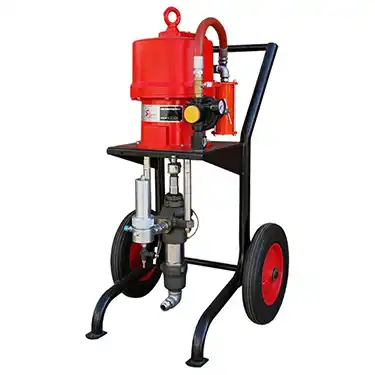
For large-scale industrial projects, we recommend pneumatic spray pumps. Keep in mind that all pneumatic units require a compressor. The corrosion protection industry relies on these paint pumps as its primary workhorse. By combining large-capacity fluid sections with powerful, air-driven motors, these units easily handle tough industrial coatings.
Their robust design delivers high fluid output, helping operators meet their film thickness requirements in much less time. Additionally, the high operating pressures support extended hose lengths. This gives your team far more flexibility on massive jobs than other airless pump types can provide.
Common Applications
Large-scale industrial projects (bridges, ships, and structural steel)
Protective coatings (corrosion and rust prevention)
High-viscosity coatings (thick paints and heavy-duty sealants)
Typical Coatings
High-Solids Epoxies & Polyurethanes: Perfect for achieving the high Dry Film Thickness (DFT) required in aggressive environments.
Intumescent Fireproofing: Thick, specialized materials that require massive fluid pressure to atomize cleanly.
Marine-Grade Anti-Foulings: Heavy-duty coatings for ship hulls and offshore structures.
Electric Airless Paint Sprayers
We recommend electric airless spray machines for hard-to-access areas (like roofs), decorative painting, and waterproofing. Standard units handle these finer finishes, while larger models step up to medium- to large-scale commercial and lighter industrial work – running straight off standard power, with no compressor required.
These airless sprayers rely on a high-output electric motor, making them compact and easy to manoeuvre – operators can escort them into difficult-to-reach areas where bulkier equipment simply can’t go. At roughly the weight of a standard 20-liter bucket of product, one person can carry both the pump and the material up to the job site in a single trip.
As an authorized distributor, Storm Machinery supplies TriTech’s high-quality range of electric airless sprayers.

Common Applications
- Commercial & residential painting (walls, ceilings, and trim)
- Medium to large commercial & light industrial projects (using larger models for lighter industrial and commercial coatings)
- Decorative & fine finishes (smooth, high-quality aesthetics)
- Roof & waterproofing coatings (lightweight portability for high-altitude jobs)
Typical Coatings
- Architectural Paints: Interior and exterior PVAs, acrylics, primers, and gloss enamels.
- Wood Finishes: Fine-finish lacquers, varnishes, and stains for joinery or timber framing.
- Light Waterproofing & Roof Coatings: Standard elastomeric coatings that require portability on residential or commercial roofs.
- Dry-Fall Paints: Ideal for large commercial ceiling grids and industrial warehouse interiors.
Hydraulic Airless Spray Pumps
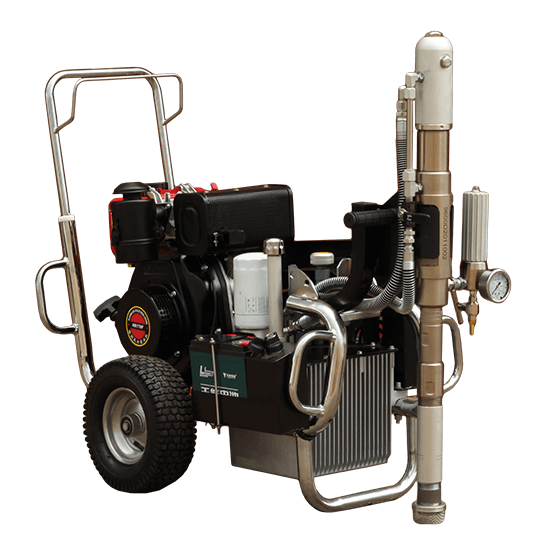
We recommend hydraulic airless spray machines for large-scale site setups and heavy-duty industrial projects. Because integrated petrol or diesel engines power these self-contained units, you don’t need to worry about sourcing external compressed air or electricity on-site.
Featuring large-capacity fluid sections, hydraulic systems easily pump a wide spectrum of materials—from thick, high-build corrosion barriers to decorative finishes and waterproofing coatings. Their sheer power, rugged durability, and total independence from external utilities make them the top choice for demanding, remote job sites.
Common Applications
Remote & off-grid job sites (no electrical power or compressed air required)
Heavy-duty industrial & protective coatings (high-build corrosion protection)
High-viscosity materials (thick, heavy coatings)
Petrochemical sites (using diesel-powered units for safety compliance)
Large-scale commercial projects (massive square-footage painting)
Typical Coatings
Heavy Elastomeric Roof Coatings: High-build waterproofing membranes applied at scale.
Bitumens & Asphalt Emulsions: Thick, sticky protective barriers for foundations and infrastructure.
Block Fillers & Mastics: Heavy-bodied materials designed to seal porous masonry and concrete.
Smooth Drywall Textures: Joint compounds and textures for high-volume commercial interior fit-outs.
Airless Spray Guns
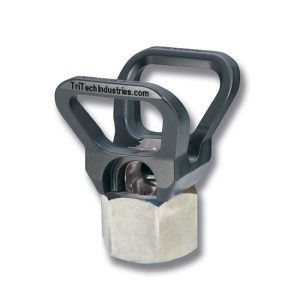
Your airless spray gun is the start/stop control valve of the whole system – the pump generates pressure, but the gun decides when and where it’s released. The right choice comes down to your coating: front-entry guns run filterless for thick, aggregate-filled industrial coatings, while rear-entry guns include a replaceable filter, making them the standard for architectural and commercial finishes. We stock both TriTech’s premium range and our own Storm-built guns

Common Applications
- Industrial and protective coatings (filterless front-entry designs)
- Architectural and commercial finishes (filtered rear-entry designs)
- High-pressure setups running 500 bar / 7250 psi and above
Airless Spray Tips
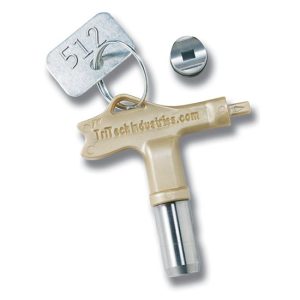
The spray tip is the smallest part of your setup and one of the biggest factors in your finish and running cost. We stock two ranges – RAC5, our in-house standard tip, and TriTech’s premium imported range, built for up to 75% longer fan-pattern life – both using the same industry-standard sizing system, so the choice comes down to the job at hand rather than compatibility.

Common Applications
- General residential, commercial, and maintenance work (RAC5)
- High-volume commercial jobs where tip wear and finish consistency matter most (TriTech)
Quick Reference - Which Airless Sprayer For Which Job
This is a starting point, not a one-size-fits-all — the right equipment for your job still comes down to your specific paint. Always check your data sheet, or read our full guide to Selecting the Correct Airless Spray Pump, before deciding.
- Pneumatic → best for heavy industrial and corrosion-protection coatings. Requires a compressed air supply.
- Electric → best for decorative finishes, wall/ceiling spraying, roof waterproofing, and (in larger models) lighter commercial and industrial coatings. No compressor needed.
- Hydraulic → best for remote sites with no power or compressed air, and continuous large-scale output.
- Front-entry guns → best for thick, high volume industrial coatings.
- Rear-entry guns → best for filtered, fine-finish architectural work.
- RAC5 tips → our in-house standard, best for general commercial and maintenance work.
- TriTech tips → our premium range, best for high-volume commercial jobs where tip life and finish consistency matter most.
ARE AIRLESS PAINT SPRAYERS DIFFICULT TO OPERATE?
No. However, any airless paint sprayer should only be handled by trained personnel – we offer basic OEM training if your team needs it (see our FAQ below for details). Because of their high-pressure output, these machines should be approached with caution – put sufficient safety measures in place when operating any airless pump or gun, and make sure your operator uses the correct PPE.
Worth knowing specifically: airless equipment operates at pressures high enough to break, cut, or inject through skin – a serious, well-documented workplace hazard known as high-pressure injection injury. It can happen even through gloves or clothing, and can look minor at first while causing serious damage beneath the skin, which is what makes it dangerous – people delay treatment. If anyone is ever pierced by paint or solvent from an airless gun, treat it as a medical emergency and get them to a doctor immediately. Always engage the trigger lock when you’re not spraying, never point a gun at any part of the body, and never try to clear a blocked tip with your hand.
FAQs
Which airless sprayer is right for me?
It depends mainly on your paint’s volume solids and where you’re working. Lower-solids decorative and touch-up work generally suits electric pumps; heavy industrial coatings need the higher pressure range of pneumatic; and sites without power or compressed air call for hydraulic. Our full guide, Selecting the Correct Airless Spray Pump, walks through it step by step
Is airless spray the same as HVLP or conventional spray?
No – airless atomises paint with fluid pressure alone, while conventional and HVLP mix it with compressed air. See our full comparison in our What is Airless Spray article.
Do I need to buy a gun and tip separately from the pump?
Most of our pump packages include a gun and starter tip, but many buyers upgrade separately as their tip wears or their job changes. See our Spray Guns and Spray Tips ranges, or check your data sheet against our tip sizing guide.
Can one airless sprayer handle multiple types of paint?
Often yes, within its rated pressure and viscosity range – but always check your paint’s technical data sheet against your pump’s spec before switching between very different coatings. Our sales engineers can help you confirm compatibility.
What are the advantages of airless spray equipment?
The biggest reason contractors choose airless over other spray methods comes down to time and labour: higher transfer efficiency means one operator can cover far more surface area per day than with a brush, roller, or conventional spray gun, with less wasted paint and cleanup from overspray. Because the system often doesn’t need solvent thinning and is built to be mobile, it’s also quick to set up and pack down between sites. See the full list of advantages above for the complete picture.
Do you offer training for your equipment?
Yes. Storm Machinery offers basic OEM training.
Do you offer equipment repairs & servicing?
Yes. Storm Machinery services and repairs all airless paint sprayers we sell. Please contact our sales team for more information.
COMPLETE EACH STAGE OF YOUR SURFACE PREPARATION AND COATING PROJECT
Achieving a flawless, industrial-grade finish requires more than just a high-performance spray painting pump. True asset protection relies on a meticulous, multi-step process. At Storm Machinery, we supply all products required for every stage of your surface preparation and coating application.
SURFACE PREPARATION - INDUSTRIAL BLAST POTS & ABRASIVES
Before the first layer of your paint hits the substrate, you need an anchor profile free of contaminants. We supply robust sandblasting pots designed for high-production site work. Our abrasive blasting equipment can handle everything from spot blasting to continuous multi-pot blast operations.
The longevity of your industrial airless spray application depends on two things: the mechanical surface profile (anchor pattern) created by your blast media, and the surface’s cleanliness before that coating goes on – see our guide to Surface Profile vs Surface Cleanliness for the full breakdown. Our range of abrasives consists of high-quality, silica-free media, significantly improving operator health and safety.
Quality Control - Surface & coating inspection
Prevent costly coating failure and ensure strict compliance with international standards (like ISO and ASTM) using our precision surface profile gauges and coating thickness gauges.